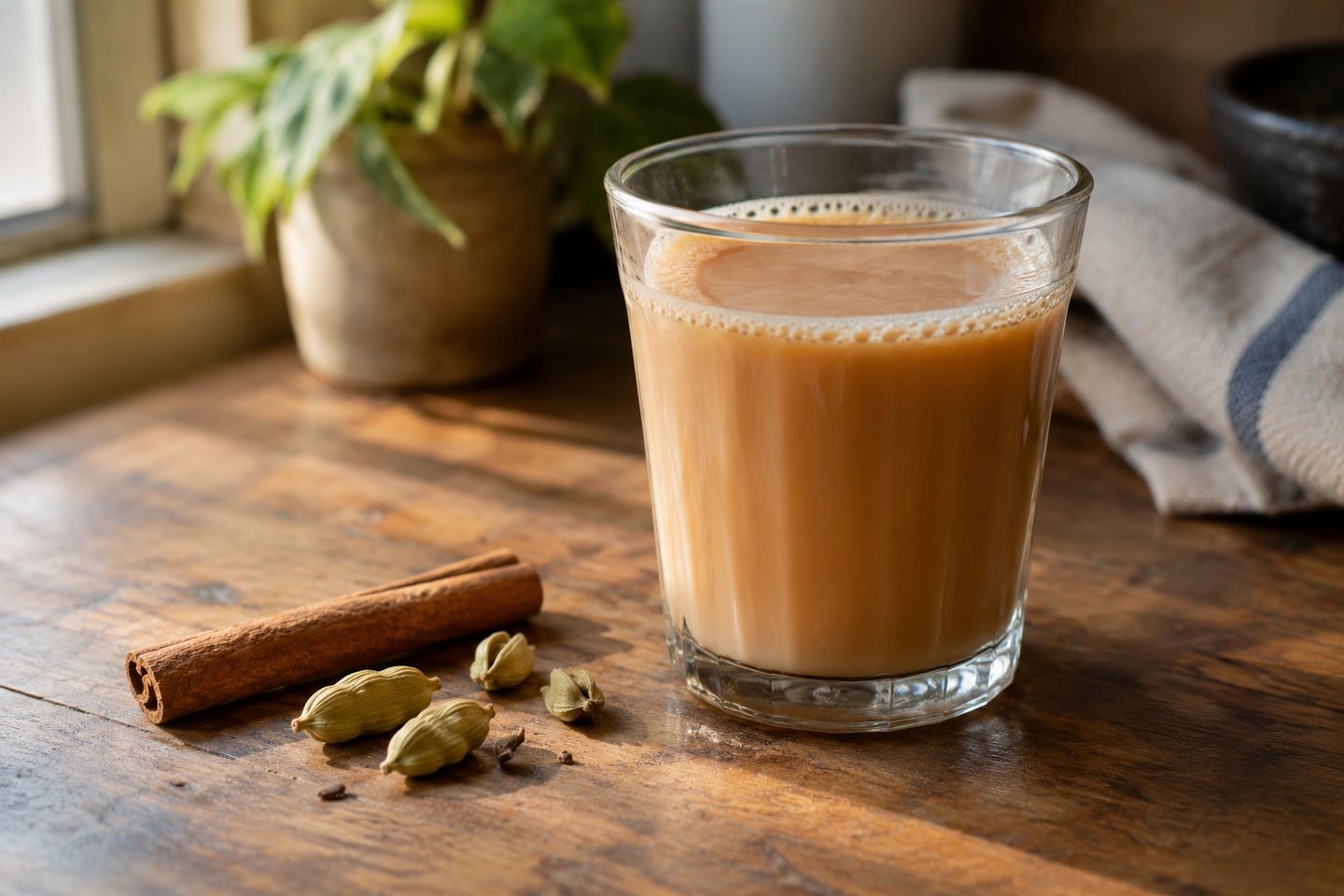
Tea names can hide an important ingredient distinction. Wikipedia's article on masala chai describes a spiced drink from India, usually based on black tea brewed with milk and water and sweetened with sugar. Wikipedia's article on herbal tea uses herbal infusion or tisane for drinks made from other plant material. The names overlap in everyday speech, while the ingredients can be quite different.
The masala-chai article explains chai through the word for tea, reaching Hindi from the Chinese word cha. In English, chai often refers to the spiced drink. The herbal-tea article notes that tea is also a well-established everyday name for drinks made from plants other than the tea plant. A useful description therefore says what is in a cup, as well as giving its familiar name.
Masala chai and its variations
In Wikipedia's account, masala chai combines tea, milk and spices, with recipes and preparation methods varying by geography and family. The article describes a preparation in which spices are simmered in water, tea is brewed in that liquid, and the mixture is strained and combined with milk or cream. This is a general culinary description, with no precise quantity or timing attached.
The same article names cardamom, ginger and cinnamon among common spices, with cloves, black pepper, star anise, mint or lemongrass also appearing. It describes variation in the spice selection across regions. That variety is part of the drink's identity. A particular cup can be described through its tea, milk, sweetener and spices without assuming a universal mixture.
The article also lists several sweeteners, including white or brown sugar, honey and jaggery, and describes alternatives to whole milk. These are ingredient choices within its culinary account. They do not create a promise about the body. The point of naming the ingredients is to make the drink's composition understandable.
What makes a tisane
The herbal-tea article distinguishes tisanes from drinks made from Camellia sinensis, the tea plant. It describes herbal infusions made with fresh or dried flowers, fruit, leaves, stems, seeds or roots. Plant material may be dried, roasted, crushed or cut before being steeped in water. Thus herbal is a broad ingredient description, rather than a synonym for a leaf.
The article explains that infusions may be strained, blended, sweetened or combined with additions such as milk or lemon juice. The familiar word tea can therefore cover different plant materials and methods. Identifying the plant parts and additions gives a clearer picture of the beverage than relying on its colour or its name alone.
The same source says that most tisanes do not naturally contain caffeine, but also notes that some plants used for infusions do contain it. The broad name herbal tea does not establish a universal caffeine status. That distinction concerns composition; it is not a recommendation to drink a particular infusion.
Ginger tea as a separate example
Wikipedia's article on ginger tea describes a beverage made from ginger root, served alone or with accompaniments such as milk, orange slices or lemon. Its Korean account describes ginger slices boiled in water or ginger juice mixed with hot water, with sweeteners and garnishes varying. These are food preparations, described without exact measurements.
The article also describes a ginger drink in Brunei, Malaysia and Singapore that includes strong sweetened black tea and milk. Its account of a Javanese version names palm sugar and spices, with fragrant pandan leaves as another possible addition. Ginger can therefore appear in a tisane or in a drink that also contains tea leaves. The ingredient list clarifies the difference.
Spices as flavourings
Wikipedia's article on spice describes seeds, fruit, roots, bark and other plant substances used mainly for flavouring or colouring food. It distinguishes them from leafy herbs and describes whole, dried, grated, crushed and ground forms. This vocabulary applies to a cup as well as to a dish. The plant part and its preparation explain what the flavouring is.
The vegetarian kitchen tour discusses seasonings within food, and the soups and dals page gives other culinary settings for spices. Their names remain ingredient descriptions, without claims that they serve as remedies.
Cautions about plant ingredients
Wikipedia's herbal-tea article notes that some herbs have toxic or allergenic effects. It also raises misidentification of plants and possible contamination of ingredients with pesticides or heavy metals. These cautions belong beside the ingredient description: herbal is not an assurance of safety, and an attractive plant name does not settle what a drink contains.