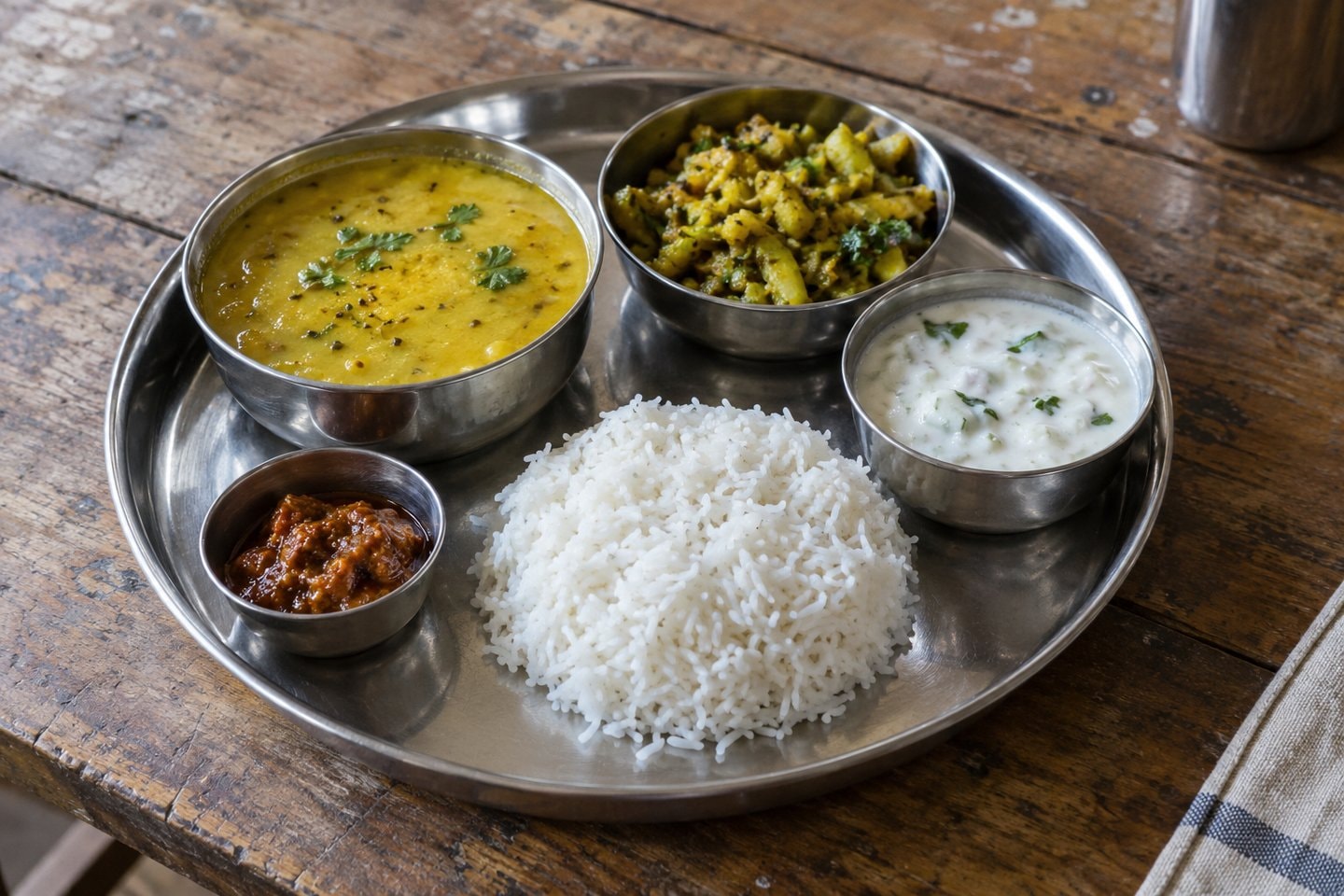
A vegetarian kitchen is easiest to understand through the different roles that foods take in a meal: a grain dish, a bread, a vegetable accompaniment, a condiment or a sweet. Wikipedia's article on vegetarian cuisine defines it through ingredients such as grains, legumes, nuts, vegetables and fruit, with meat and animal tissue excluded. Some forms include dairy or eggs. That is a description of ingredients, while the names of dishes reveal much more about preparation and texture.
Wikipedia's account of Indian cuisine stresses that it comprises regional and ethnic cuisines. Rice, wheat flour, millet and pulses appear among its staples, and seasoning varies across the country. A tour of familiar dishes can offer an entry into that variety without claiming to represent every region. The following descriptions concern food, with no precise quantities or set cooking timetable.
Khichdi: grain and pulses together
Wikipedia's article on khichdi describes a South Asian dish of rice and lentils with numerous variations. Its account also includes versions made with pearl millet and mung dal. The name therefore identifies a family of grain-and-pulse dishes rather than a single fixed combination. Rice and pulses cooked together provide the central idea, while the particular grain, pulse and additions distinguish a version.
The article names cauliflower, potato and green peas as common vegetable additions. It also describes a rural Haryana version based on pearl millet and mung dal, accompanied by ghee, lassi or yogurt. These examples make regional difference tangible. Khichdi can be discussed by identifying what is combined in the dish and what accompanies it, without turning that description into a measured recipe or a claim about its effects.
Upma: a savoury grain preparation
Wikipedia's article on upma describes a thick porridge made from dry-roasted semolina or coarse rice flour, originating in Southern India. The preparation may include seasonings and vegetables. In the semolina description, the grain is roasted and combined with seasoned ingredients and water, giving a fluffy texture as the liquid is absorbed. The method explains the dish's character without requiring a set amount of grain or water.
The same article says that texture varies with preparation, and describes a cracked-wheat version with vegetables such as peas, carrots and beans. Semolina upma may also include nuts or other additions. The grain base remains a useful point of reference as variations are encountered. Upma and khichdi both bring grain into a meal, but their ingredient descriptions explain the different foods represented by those names.
Roti: bread beside the meal
Wikipedia's article on roti describes a round, unleavened flatbread from the Indian subcontinent, commonly made from whole-wheat atta and water. Unleavened means that the bread is made without the yeast leavening described for naan in the same article. Flour and water form a dough that is flattened and cooked on a tava or pan. That simple description explains the bread's form and its place beside other dishes.
The roti article also describes flatbreads made with millet, maize and rice flour. It places roti beside cooked vegetables or curries, and notes its use as a carrier for those foods. The bread is thus an accompaniment as well as a food in its own right. A meal can be read through this relationship between staple and savoury dishes, rather than through a list of disconnected ingredients.
Raita: yogurt with other ingredients
Wikipedia's article on raita describes a side dish of dahi, or yogurt, mixed with vegetables, fruit or pulses. The yogurt may be seasoned with coriander, roasted cumin, mint or cayenne. Its preparation can bring a fried spice seasoning together with chopped produce and yogurt. A cucumber version is common in the article's account, while other versions use different bases and seasonings.
Raita shows why vegetarian and vegan are different ingredient descriptions. Yogurt is central to the dish as the article defines it. The point is to recognise the food's composition, not to rank it against a different accompaniment. The contrast of chopped ingredients with yogurt gives raita a distinct place among the foods described here.
Chutney: a varied condiment
Wikipedia's article on chutney describes both raw preparations and cooked fruit versions. It explains fresh coriander chutney through leaves ground with flavourings such as chilli, lemon juice, cumin and black pepper. It also describes fruit cooked with sugar and vinegar and seasoned with spices. The word chutney therefore covers varied methods, rather than only a sweet condiment.
The article places these relishes alongside staples such as rice, and describes regional versions using coconut, herbs, mango or tomato. A condiment can bring a distinct flavour to a meal while retaining its own identity. Its ingredients and preparation explain whether it is leafy, fruity or based on coconut. These are culinary descriptions; the spice or plant names carry no medical promise.
Halva: sweets with different textures
Wikipedia's article on halva describes a broad family of confections found across South Asia and beyond. In grain-based versions, flour or semolina is toasted in fat and combined with sweetened liquid. Its semolina account allows water or milk, with oil or butter used for toasting. The result belongs to a wider family whose texture varies substantially.
The same article distinguishes moist semolina sweets from more crumbly sesame-based halva. It also describes carrot halva through grated carrot cooked with milk, sugar and ghee, often flavoured with cardamom and garnished with nuts. The shared name does not mean a shared texture or identical ingredients. The descriptive name of the particular version is useful.
Kheer: a milk-based sweet
Wikipedia's article on kheer describes a pudding or porridge commonly made from milk, rice and sugar or jaggery. Nuts, dried fruit, cardamom and saffron may flavour it. The article also names versions with vermicelli, cracked wheat, sago or tapioca. Here, the milk-based preparation provides a point of reference, while the grain or other ingredient distinguishes a variation.
The article explains kheer's name through a Sanskrit word for milk or a milk-based dish, and connects the South Indian name payasam with milk as well. Those names offer a useful clue to the food being discussed. The texture and flavour belong to the particular preparation, so a general description can introduce the family without pretending that every bowl is the same.
Seasoning and the wider table
Wikipedia's article on spice describes plant materials used mainly for flavouring or colouring, distinguishing them from leafy herbs. Indian cuisine's account describes spices fried in oil or ghee and added to a cooked dish. This is another way that separate preparations become a meal: the staple, accompaniment and seasoning each have a role.
The soups and dals guide continues the discussion of pulses; the ghee page explains a cooking fat used in these traditions. The chai and herbal teas page turns to drinks, while the traditional taste vocabulary places flavour in a different, cultural framework.