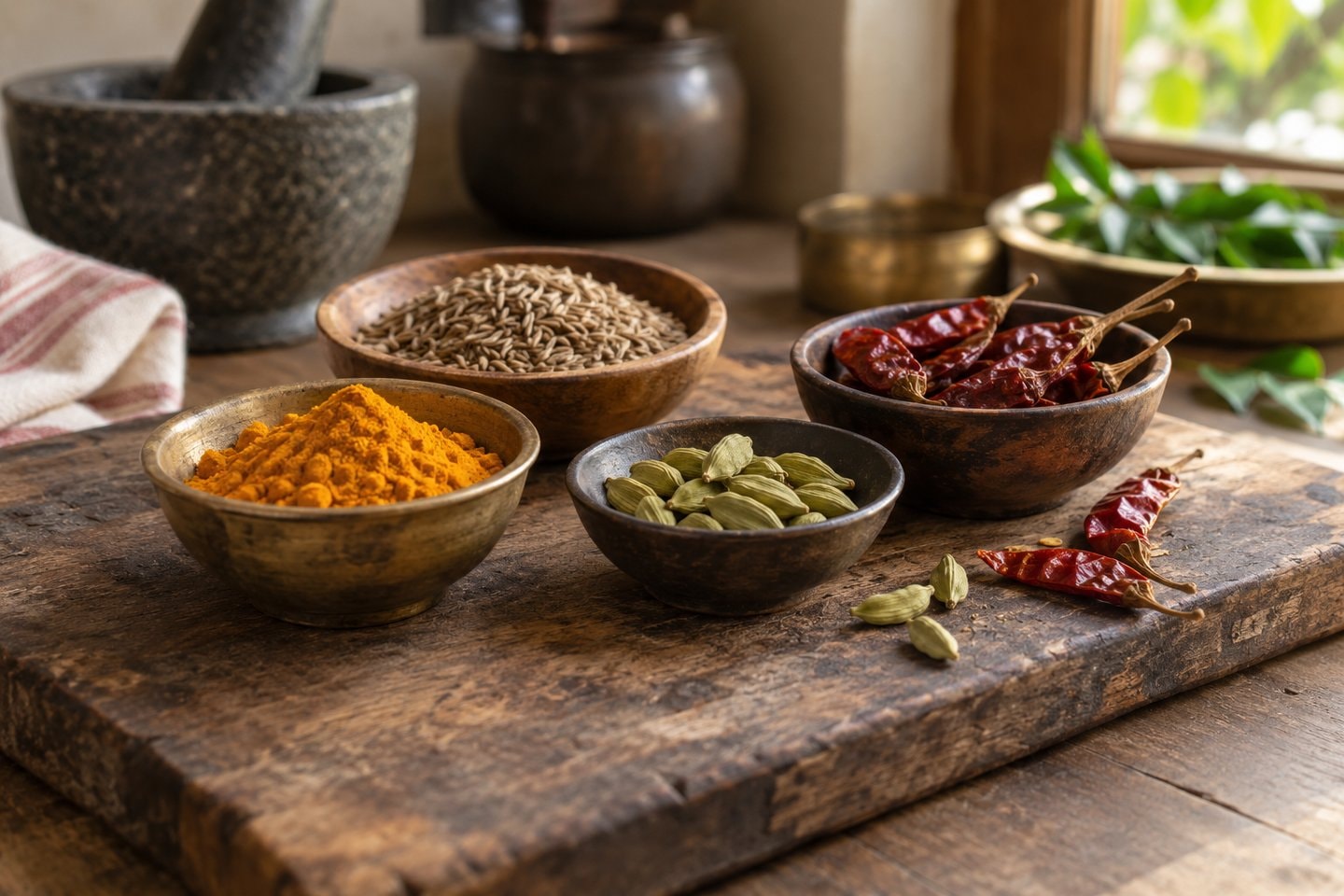
Ayurvedic eating is a way of discussing food within a traditional account of people and their surroundings. Wikipedia's article on dosha describes Ayurvedic literature as linking vata, pitta and kapha with qualities that vary according to seasons, time of day and other factors. That connection belongs to the theory described by the article. A cultural reading can explain its language without prescribing what a reader should eat.
Wikipedia's article on Ayurveda places the tradition's historical roots in the Indian subcontinent, and includes food in its broader account of practice. The subject has a philosophical setting as well as a kitchen setting. Food names, cooking methods and traditional classifications are related topics, but each asks a different question. An ingredient can be described precisely without being assigned a promise about the body.
Seasons within a traditional framework
In the dosha article, Ayurvedic tradition assigns particular qualities to each category. Vata is described through dryness, coldness, lightness and mobility; pitta through heat, moistness, liquidity and sharpness; kapha through qualities including heaviness, coldness, softness and slowness. These are the framework's descriptions. The seasonal idea makes sense within that same account of changing qualities, rather than as a modern measurement of a food.
The article also says that Ayurvedic tradition links a person's constitution with the relative presence of the doshas. A seasonal food discussion therefore combines an account of surroundings with an account of the person. Explaining that relationship does not require classifying an individual reader. The page on vata, pitta and kapha follows the vocabulary in more detail, keeping the terms attached to their tradition.
Wikipedia's Ayurveda article discusses moderation within the tradition's philosophical principles. Here, that is a description of an idea in a text-based tradition, rather than a rule about portions or a daily routine. A historical account need not become a personal plan. The language of seasons can be explained as part of that history while ordinary meals remain a subject of taste and cooking.
A meal with varied dishes
Wikipedia's article on thali describes the Ayurvedic six tastes as sweet, sour, salty, pungent, bitter and astringent, and says a thali often includes them all. Its account gives the vocabulary a meal setting. The flavours are considered across the selection of dishes, with the tradition's idea of an ideal meal kept in view.
The same article uses thali for a round platter and for the meal served upon it. Small bowls may hold dishes around the edge, with rice or bread occupying the centre. Typical components include dal, vegetables, yogurt, chutney, pickle and a sweet dish. The selection varies by region, so the platter does not stand for an identical meal everywhere.
A shared meal can therefore be discussed through its distinct preparations. Rice or bread, a pulse dish and a condiment retain their own identities while appearing together. The page on the traditional tastes explains the flavour vocabulary and its cultural settings. It also distinguishes the everyday language of flavour from the terminology used in physiology.
Spices as kitchen ingredients
Wikipedia's article on spice defines spices as plant materials used mainly to flavour or colour food, and distinguishes them from leafy herbs. It describes forms including whole, dried, grated, crushed and ground spices. These are culinary categories. They explain the material that appears in a dish and how it has been prepared for cooking.
The distinction between a whole spice and a ground one is a useful part of a dish description. The names identify a seed, root, bark or other plant material; the form identifies what the cook is working with. An account of Ayurvedic food can retain that concrete kitchen language. It need not make a spice into a medicine or claim an effect from a cup or a meal.
Khichdi as a food example
Wikipedia's article on khichdi describes a South Asian rice-and-lentil dish with numerous variations, including versions using millet and mung dal. Its account names cauliflower, potato and green peas among common additions. These details describe the food itself. The dish can be understood through the combination of grain, pulses and optional vegetables.
The article also describes a Haryana version using pearl millet and mung dal, served with ghee, lassi or yogurt. That regional detail gives the broad name a more specific setting. It shows why identifying the ingredients is more informative than assuming a universal preparation. The vegetarian kitchen tour places khichdi beside other grain dishes, breads, accompaniments and sweets.
Keeping the contexts clear
An Ayurvedic classification and a culinary description can sit beside each other while retaining their meanings. The dosha article supplies an account of traditional qualities and seasonal change. The thali article describes a platter and the taste vocabulary attached to a varied meal. The food articles describe ingredients and preparations. Together, those sources give the subject context without converting the discussion into an eating schedule.
The National Center for Complementary and Integrative Health states that some Ayurvedic preparations may contain lead, mercury or arsenic in amounts that can be toxic, and advises talking with a health care provider before using Ayurvedic products.