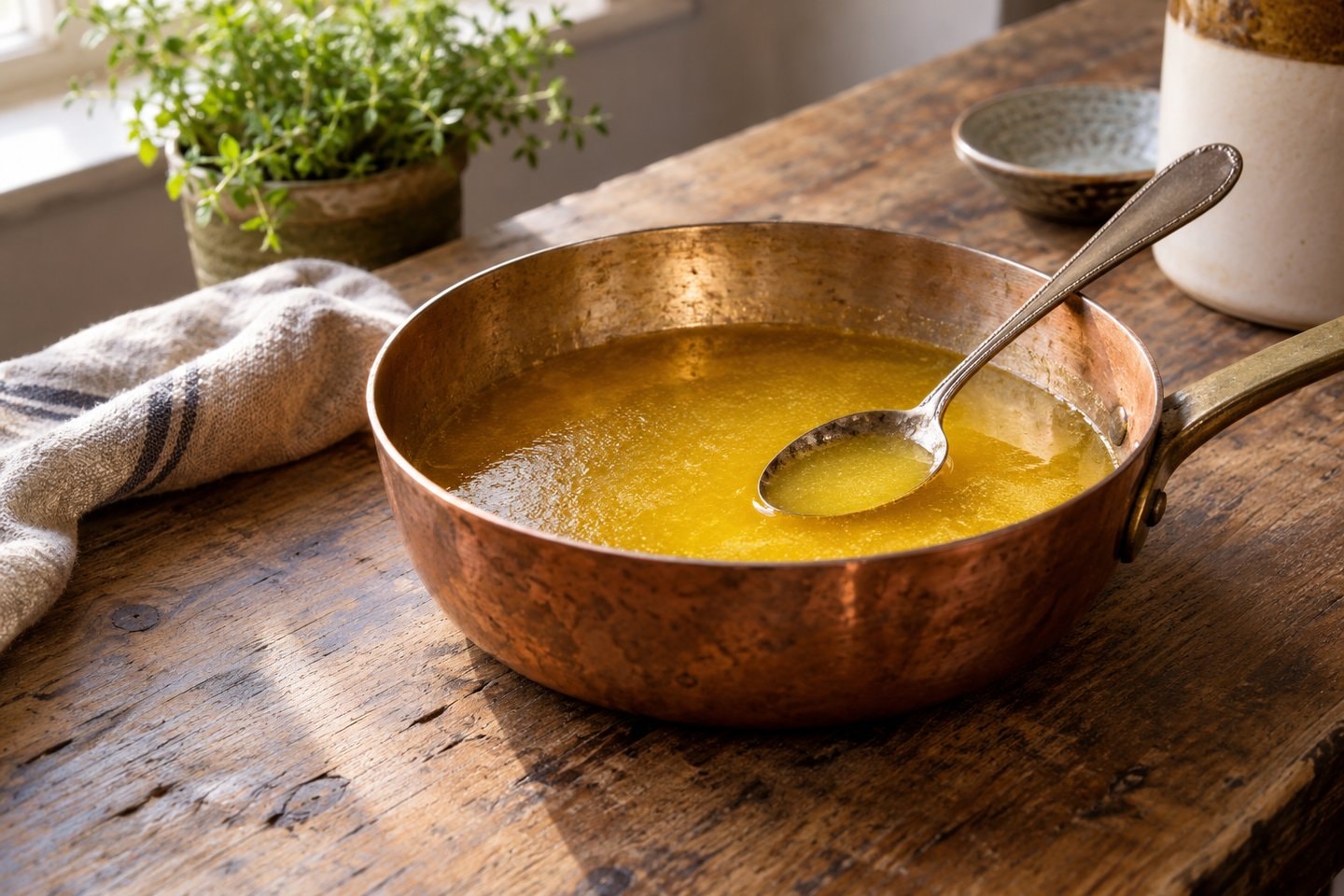
Ghee is a cooking ingredient with a distinct flavour and a place in the food traditions of the Indian subcontinent. Wikipedia's article on ghee describes it as a type of clarified butter, usually made from cow or buffalo butter. The article identifies its nutty flavour as a characteristic. Its identity begins with butter and with the separation that takes place during preparation, rather than with a spice mixture or a grain.
The same article places ghee both in Indian cooking and in Hindu religious ritual. These uses give the ingredient different contexts. A spoonful accompanying bread belongs to a meal; an offering in a ritual belongs to a religious practice. Describing each context separately makes the subject easier to follow. Neither use is a medical claim about the ingredient.
What clarification means
Wikipedia's account of clarified butter explains that clarification removes milk solids from butter. In its general description, melting allows the components to separate, water evaporates, material at the surface is skimmed away, and other solids settle beneath the liquid fat. The clear butterfat is retained. This is an account of a cooking process, rather than a recipe with measurements or a timetable.
The ghee article describes simmering butter, skimming the surface and separating the clear fat from the residue at the bottom. The clarified-butter article distinguishes ghee by the further cooking that develops a nutty taste as the milk solids brown. This difference in preparation explains why the terms are related without making them interchangeable in every description. Clarification names the separation; ghee also has a particular flavour associated with the way it is made.
It is useful to picture the separation when reading a culinary description. The retained ingredient is the clear fat, while the surface material and settled residue are described as being removed. There is no need to turn that picture into a sequence of instructions. The aim is to recognise what the name means when it appears among a dish's ingredients.
A flavour that varies
The ghee article says that its texture, colour and taste depend on the butter, the milk used and the cooking process. It also notes that spices may be added for flavour. Thus a description of ghee does not promise that every preparation will taste or look identical. The general name identifies the ingredient, while the particular preparation gives it its own character.
The article distinguishes the flavour of the milk fat from flavour developed during clarification. That is a useful way of reading the word nutty: the term describes a taste associated with cooking, and does not mean that nuts must be present. Ghee can be discussed as an ingredient in its own right, with attention to aroma and flavour rather than to claims about the body.
Across the Indian table
Wikipedia's article on Indian cuisine emphasises regional variety, and describes a technique in which spices fried in ghee or oil are added to cooked dal or curry. This gives ghee a role in the seasoning of a dish as well as in cooking its main ingredients. The technique is part of a wider culinary vocabulary of grains, pulses, vegetables and seasonings.
The ghee article gives many regional examples. It describes ghee accompanying roti in North India, appearing beside dosa in Karnataka and Tamil Nadu, and being used in rice dishes and sweets in South Indian cuisine. These examples show the range of its uses without suggesting that every regional meal contains it. The same ingredient can accompany a bread, carry a seasoning, or become part of a sweet dish.
The vegetarian kitchen guide introduces breads, grain dishes, accompaniments and sweets through their ingredients and preparation. The page on soups and dals describes the pulse dishes that often appear beside rice or bread. Together, those subjects give ghee a culinary setting: its meaning is clearer within a meal than in an isolated list of ingredient names.
A separate ritual setting
Wikipedia's ghee article describes its use in Vedic fire rituals and in lamp offerings. The article also discusses ghee within other Hindu worship practices. These are religious uses, distinct from the ingredient's role in a pan or on a plate. Respectful description keeps that distinction visible and does not treat a ritual as a cooking method.
Ghee can therefore be understood through linked but separate questions: what butter clarification involves, how a flavour develops, where an ingredient appears in regional food, and what a tradition says about ritual use. Each question adds context without turning a food into a remedy or a rule for eating.